
Understanding Military Culture for Better Veteran Care
Dear VA Team and Fellow Veterans,
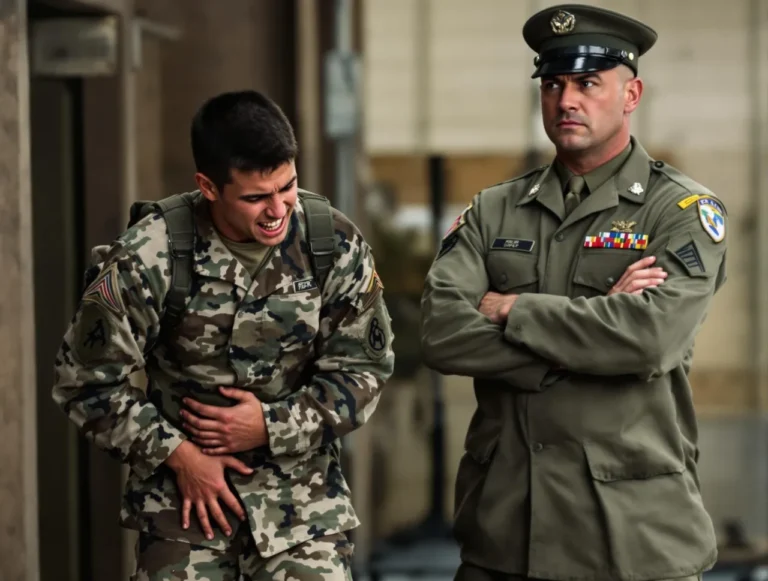
Picture this: It’s 1995, and a young soldier twists his back during PT. His sergeant asks, “You good to go?” The soldier responds, “Roger that, Sergeant” – even though his back is screaming. Fast forward to 2025, and that same veteran sits across from a VA examiner who asks, “Why didn’t you seek treatment for your back injury during service?”
The answer isn’t simple – it’s cultural.
The Military Reality We Lived
Let us share with both sides what really happens in military culture:
Blood Wings and Breaking Points
- Initiation rituals that tested pain tolerance
- Public consequences for showing weakness
- “Suck it up, buttercup” mentality from day one
- Unit cohesion built on shared endurance
Why We Stayed Silent
Fear of the “Malingerer” Label: Nothing ended a military career faster than being labeled someone who fakes illness to avoid duty.
Mission First Mentality: The mission always came before personal comfort. Always.
Chain of Command Reality: Going to sick call meant explaining to your supervisor why you couldn’t do your job.
Battle Buddy Code: Your teammates were counting on you. You didn’t let them down for “a little pain.”
The Documentation Challenge
VA Staff: You need documented proof of injury during service.
Veterans: We were conditioned NOT to document weakness.
🤝 This isn’t defiance – it’s conditioning.
Bridging the Communication Gap
What Veterans Say vs. What We Mean:
- “I’m fine” = I’m in pain but trained to push through
- “It’s nothing” = It hurts but I can’t show weakness
- “Roger that” = I understand, but I’m not elaborating
- “No big deal” = This is actually a very big deal
What Helps VA Staff Understand:
- Ask follow-up questions: “Tell me more about that incident”
- Understand context: Military culture prioritized mission over medical care
- Recognize conditioning: 20+ years of “suck it up” doesn’t disappear overnight
- Create safe space: Veterans need permission to admit vulnerability
What Helps Veterans Communicate:
- Speak their language: Use medical terminology, not military slang
- Provide context: Explain WHY you didn’t seek treatment
- Be specific: Dates, locations, incidents – details matter
- Share respectfully: Help them understand military culture
Real Talk from Sarge
I spent 23 years getting denied because I expected VA staff to understand military culture without explanation. That was my mistake.
When I finally achieved 100% P&T in 2023, it wasn’t because I got tougher – it was because I learned to translate my military experience into civilian medical language.
The breakthrough: I stopped expecting them to read my mind and started sharing my reality.
The Solution: Mutual Understanding
VA Staff: Learn why veterans were conditioned to hide injuries
Veterans: Learn how to communicate your reality effectively
When a 22-year-old Marine says “I’m fine” after an IED blast, he’s not lying – he’s following conditioning that taught him weakness equals failure.
When a VA examiner asks for documentation, they’re not being difficult – they’re following regulations designed to protect veteran benefits.
Both sides are doing their jobs. We just need to understand each other better.
Moving Forward Together
The goal isn’t to change military culture or VA regulations – it’s to bridge the gap with understanding and respect.
Veterans: Your pain was real even if you didn’t document it. Learn to articulate that reality.
VA Staff: Their silence wasn’t deception – it was survival training. Help them find their voice.
Together, we can ensure every veteran gets the benefits they’ve earned through service, sacrifice, and yes – even the injuries they were trained to ignore.
Because understanding military culture isn’t just helpful – it’s essential for proper veteran care.
IGY6 – No Veteran Left Behind
🎖️Sarge
Boots 2 Benefits, LLC
Tactical VA Disability Claims Help for Veterans