
Happy Father’s Day to Our Veteran Dads: The Unseen Heroes of Military Families
BLUF: Today we honor the veteran fathers who served our country while navigating the unique challenges of military parenthood – from deployment separations to carrying the invisible wounds of service into fatherhood.
Brothers and Sisters,
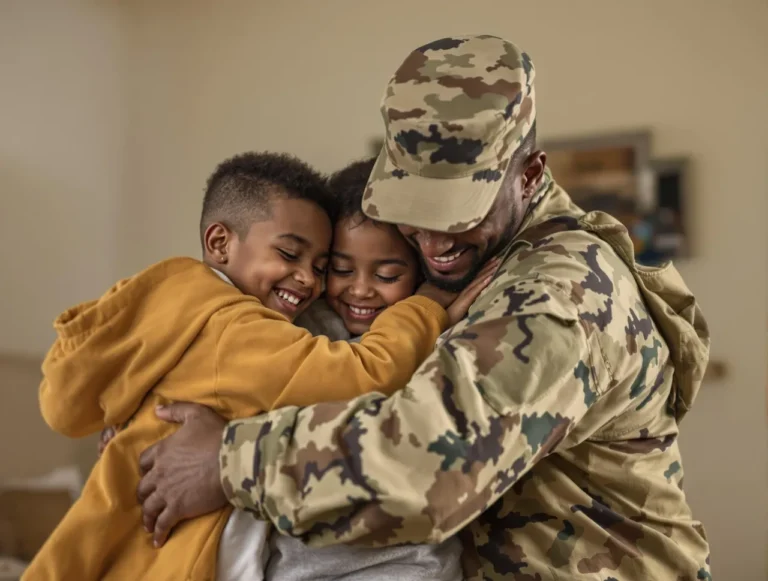
Today, as we celebrate Father’s Day, I want to take a moment to recognize a special group of dads – our veteran fathers who served this nation while simultaneously trying to be the fathers their children deserved. These men faced challenges that most civilian dads will never understand, and their sacrifices deserve recognition.
The Reality of Military Fatherhood
Military fathers don’t just miss little league games or school plays – they miss first steps, first words, and sometimes even the birth of their children. They place an incredible trust in their spouses back home to carry out their wishes, make decisions on their behalf, and essentially be both parents while they serve our country thousands of miles away.
I know this reality intimately – not just as a veteran, but as a veteran’s spouse and mother of a veteran. I’ve lived this from every angle.
When I was pregnant with my first son, I was stationed at Redstone Arsenal in Alabama while my spouse was stationed in Germany. Picture that – growing your first child inside you while your partner is an ocean away, unable to feel those first kicks or be there for the midnight cravings and fears that come with first-time parenthood.
During my second pregnancy, the tables turned. I was in Germany while Dad was in Washington D.C. Same ocean, different sides, same heartache of experiencing pregnancy without your partner by your side.
But the third time? That one still gets me. We were finally together for the pregnancy – every appointment, every milestone, planning for our growing family. Then, nine days after our baby was born – nine days – he deployed for 18 months. Eighteen months of watching our newborn grow, learn to crawl, take first steps, say first words, all while Daddy was a voice on the phone and a face on a screen.
The Trust Between Military Spouses
What people don’t understand is the incredible trust that military fathers place in their spouses. It’s not just “honey, can you handle bedtime tonight?” It’s “I’m trusting you to raise our children according to our values, make major decisions about their health and education, and somehow explain to a six-year-old why Daddy can’t come to his school play.”
Military spouses back home become the keepers of the father’s wishes, the enforcers of family rules, and the bridge between deployed dad and confused children. They carry photos to school events, record videos of soccer games, and somehow make a phone call feel like a hug.
Coming Home: The Invisible Challenge
But here’s what many don’t talk about – coming home can be just as challenging as leaving. Children grow and change rapidly. The baby you left becomes a toddler int he terrible twos. The quiet five-year-old becomes a chatty eight-year-old with friends you’ve never met.
But it’s more than just missed milestones. The family has learned to function as a unit without dad. The kids are used to listening to mom, following mom’s rules, and going to mom when they need something. Mom has become the sole authority figure, decision-maker, and disciplinarian.
Then dad comes home, fresh from commanding troops where “I gave an order” was enough, where tasks were followed without question, where his authority was absolute and unquestioned, they have to relearn that kids aren’t soldiers. They don’t understand why this person who’s been a voice on the phone suddenly expects immediate compliance. They’re not used to his command presence, his military bearing, or his no-nonsense approach.
The spouse, meanwhile, has been both parents for months or years. She’s established routines, rules, and relationships that worked for the family unit. Now she’s trying to reintegrate a partner who expects to step back into a leadership role in a family that’s learned to operate without him.
Veteran fathers often struggle with feeling like strangers in their own homes, trying to reconnect with children who’ve learned to function without them. Add in the invisible wounds many of us carry – PTSD, anxiety, depression, physical limitations from service-connected disabilities – and fatherhood becomes even more complex.
The military mindset that served them well overseas doesn’t always translate well into family life. Kids need patience, explanation, and relationship-building – not orders and immediate compliance. It’s a complete shift in leadership style that leave many veteran fathers struggling.
The ‘Perks’ of Deployment: A Different Perspective
Now, before you think I’ve completely lost it, hear me out. There ARE some “benefits” to being the deployed parent – though they come with a hefty price tag of guilt and missed moments.
Take, for example, the daily reporting calls. When our middle son started sleepwalking after his dad deployed (stress response, anyone?), I’d find myself on the phone explaining how our sleepwalking son had wandered into his big brother’s room and decided the TV cabinet made a perfect bathroom.
For me? Dealing with a 2-hour cleanup at 3:00 AM trying to figure out if this was normal kid behavior or something I needed to worry about – all while managing a newborn and keeping the oldest from having a meltdown about his “ruined” Pirates of the Caribbean TV/VCR.
For deployed dad? A 45-second chuckle, maybe some sympathetic “oh no, honey” sounds, and then back to whatever he was doing hundreds or thousands of miles away.
Don’t get me wrong – I’m not bitter (okay, maybe a little). But there’s something to be said for being the parent who gets the funny story version instead of the actual bodily-fluid cleanup version. The deployed parent gets the highlight reel; the home parent gets the director’s cut with all the messy, unglamorous behind-the-scenes footage.
The Strength They Pass On
Despite these challenges, veteran fathers bring something special to their children. They teach resilience through their own example. They show what it means to serve something bigger than yourself. They demonstrate that love sometimes means sacrifice, and that duty and family can coexist even when it’s painful.
They pass on the importance of helping those who can’t help themselves – serving the underprivileged. Through their actions and values, these fathers instill in their children a deep understanding that true strength comes from lifting others up, especially those without a voice or the resources to advocate for themselves.
These dads raise children who understand that freedom isn’t free, that some things are worth fighting for, and that strength comes in many forms – including the strength to ask for help when you need it.
To Our Veteran Fathers Today
If you’re a veteran dad reading this, know that your sacrifices haven’t gone unnoticed. The birthdays you missed, the bedtime stories you couldn’t read, the games you watched on video calls instead of from the sidelines – all of it mattered. Your service protected not just our nation, but the future your children will inherit.
And if you’re struggling with the transition back to civilian fatherhood, if the invisible wounds make it hard to connect, if you feel like you’ve missed too much – you’re not alone. Reach out. Get help. Your children need you (and want you), and there’s no shame in fighting for that.
Moving Forward
Today, as we honor all fathers, let’s especially remember those who served in uniform while also serving their families. Their dedication to both country and children deserves our respect, our support, and our commitment to ensuring they get the help they’ve earned.
Because at the end of the day, these veteran fathers didn’t just serve our country – they served our future by raising the next generation with the values that make America strong.
You served. You sacrificed. You earned recognition not just as veterans, but as the fathers who gave everything for both country and family.
Happy Father’s Day, warriors. Your children are proud of you, and so are we.
🎖️ Sarge
P.S. – If you’re a veteran struggling with fatherhood challenges related to your service, remember that help is available. Your VA benefits may include family counseling and support services. You’ve earned that help – use it. Even Sarge isn’t too proud to ask for directions when lost… and I’ve been known to take a few wrong turns in my day!
IGY6 – I Got Your Six. No Veteran Left Behind.
Visit Boots2Benefits.com for tactical VA disability claims help and join our mission to support veteran families.